In this article
What to know
- The pivotal outcomes were shingles and persistent pain, not a biological-age score.
- Later durability estimates used a historical comparison.
- Different publications can include overlapping participants.
Keep the endpoint visible
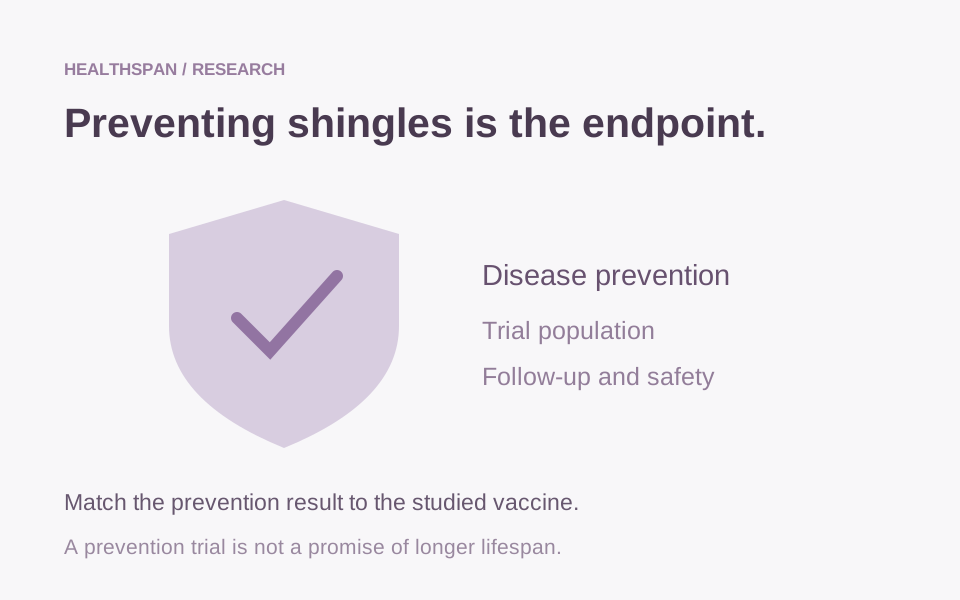
Healthy aging can mean avoiding a concrete illness rather than changing an abstract age score. The pivotal recombinant zoster vaccine trials asked whether vaccination reduced shingles, and in older participants also examined postherpetic neuralgia, the persistent pain that can follow an episode. Those are useful clinical outcomes in their own right. They should remain the center of the explanation even when other headlines attach broader benefits to the same vaccine. Preventing an illness does not require a claim that every dimension of aging has been altered. [1] [2]
The intervention was a specified vaccine given in a defined schedule, with a placebo comparison and systematic follow-up. A reader should distinguish that evidence from an observational comparison between people who chose vaccination and those who did not. Both can be informative, but they address different sources of uncertainty. The randomized studies reduce the possibility that the apparent benefit simply reflects differences in access to care or other habits among people who decide to be vaccinated. They do not answer every question about every later outcome.
For a related perspective, read Match preventive care to a defined question.
ZOE-50 tested prevention in adults aged fifty and older
In ZOE-50, 15,411 evaluable adults received vaccine or placebo in a two-dose schedule. During an average 3.2 years, the modified vaccinated cohort had six confirmed shingles cases in the vaccine group and 210 in the placebo group. The trial reported 97.2% efficacy against shingles. That figure describes a relative comparison over study follow-up, not a guarantee that an individual recipient can never develop the disease. It also belongs with the vaccine and population actually studied, rather than being borrowed for unrelated immune-support products. [1]
The analysis population matters when interpreting a result. A modified vaccinated cohort reflects specified rules about receiving doses and when cases begin counting. It is not simply every person who first encountered the study. When comparing effectiveness figures across reports, check whether the same dosing and follow-up definitions were used. A difference in percentages can reflect a different analysis or observation period rather than a contradiction. The practical question about completing a series is separate from a claim about the maximum possible percentage in an advertisement.
ZOE-70 examined an older population and persistent pain
ZOE-70 enrolled 13,900 evaluable adults aged at least seventy. Over an average 3.7 years, shingles occurred in 23 vaccine recipients and 223 placebo recipients, with efficacy of 89.8%. A pooled analysis of older participants from ZOE-50 and ZOE-70 also found protection against postherpetic neuralgia. The pooled analysis is useful, but it is not a third independent trial. The populations and reports overlap, so a list of publications should not be mistaken for the same number of separate experiments. [2]
Keeping the pain outcome separate helps explain why prevention can matter even when an illness is not usually discussed in terms of survival. A healthspan decision can concern the ability to sleep, work or carry out ordinary activities without an episode and its complications. The trials nevertheless measured specific diagnosed outcomes; they did not assign each participant a number of additional healthy years. Avoid translating a prevented complication into a personal longevity estimate that the study never calculated.
For a related perspective, read How ACHIEVE tested cognition.
Protection over time requires a different comparison
The long-term follow-up of vaccinated ZOE participants reported protection persisting through approximately ten years. Its later-period estimates used a historical control derived from the original trials because the original placebo recipients had subsequently been offered vaccination. That design is understandable, but it is not equivalent to maintaining a newly randomized unvaccinated group for the entire decade. It adds durability information while introducing assumptions about the expected background rate. Annual estimates also become less precise when fewer participants and events contribute. [3]
Immune measurements and clinical cases should not be treated as interchangeable evidence. Antibody or cellular responses can help explain persistence, while the occurrence of shingles is the direct clinical outcome. Neither a favorable immune marker nor a long follow-up headline determines an individual’s need for a future dose. Current eligibility, timing and individual circumstances belong in a discussion with the relevant clinician or vaccination service. This article explains the studies; it does not supply a personalized vaccination schedule.
Safety belongs beside benefit
Injection-site and short-term systemic reactions were more common with the vaccine in the pivotal trials. In ZOE-70, serious adverse events and deaths occurred at similar frequencies between groups. A transient reaction that disrupts a day and a serious adverse event are different safety outcomes. Reporting only one can distort the experience a person should anticipate or the severity of the observed risks. The trials provide a defined comparison, not evidence that every symptom after a dose was caused by vaccination. [1] [2]
Clinical suitability can also depend on medical history and current treatment. A trial summary is not a substitute for checking those circumstances at the point of care. For an appointment, a useful preparation is an accurate vaccination record and a list of questions about the expected schedule, reactions and follow-up. The goal is an informed preventive-care decision. A consumer should not have to buy a biological-age test or an unrelated wellness bundle to understand that decision.
For a related perspective, read Why prevention also needs a harm assessment.
Do not let a broader headline replace the established benefit
These three primary reports establish a coherent story: randomized protection against shingles, evidence in an older group and later information about durability. They do not, by themselves, establish prevention of dementia or a general extension of lifespan. Those claims need their own studies, designs and limitations. An interesting new outcome should be assessed without erasing what has already been demonstrated for shingles and persistent pain. A careful explanation can acknowledge developing questions while keeping the strongest evidence first. [1] [2] [3]
For a reader planning preventive care, the useful next step is to review ordinary records and discuss an appropriate vaccine decision in context. Compare the evidence with other preventive interventions by asking what illness was prevented, who participated, how long follow-up lasted and what safety outcomes were collected. This is a more concrete standard than asking whether a product belongs in a longevity routine. Avoiding a well-defined illness can be a meaningful healthy-aging outcome without an invented promise about an individual’s remaining years.
Sources
Research describes groups and specific study conditions. Your medical history, symptoms and treatment decisions require advice from your own qualified clinician.